

CVJ Cage Grinder for New Energy Vehicle CV Joint Manufacturing: Precision, Automation and Industry Trends
The rapid growth of the new energy vehicle (NEV) industry is significantly increasing the demand for high precision constant velocity joint (CVJ) components. As a critical part of the CV joint assembly, the cage plays a decisive role in torque transmission stability, vibration control, and service life. This has led to a rising need for advanced CVJ cage grinder technology in modern automotive component manufacturing.
Growing NEV Market Driving Demand for CVJ Cage Grinding
Compared with traditional internal combustion vehicles, new energy vehicles require smoother torque delivery, lower vibration, and longer drivetrain durability. CV joints in electric vehicles often operate under higher torque and continuous load conditions, placing stricter requirements on cage groove geometry and surface finish.
As a result, manufacturers are increasingly investing in high-precision CVJ cage grinder equipment to ensure cage accuracy and consistency. In applications such as electric drive shafts and half-shaft assemblies, precision cage grinding has become a key process to guarantee drivetrain reliability.
Function and Machining Target of a CVJ Cage Grinder
A CVJ cage grinder is specifically designed to grind the inner and outer raceway grooves of CV joint cages. The cage positions and guides the rolling elements inside the CV joint, and its geometric accuracy directly determines ball motion stability and load distribution.
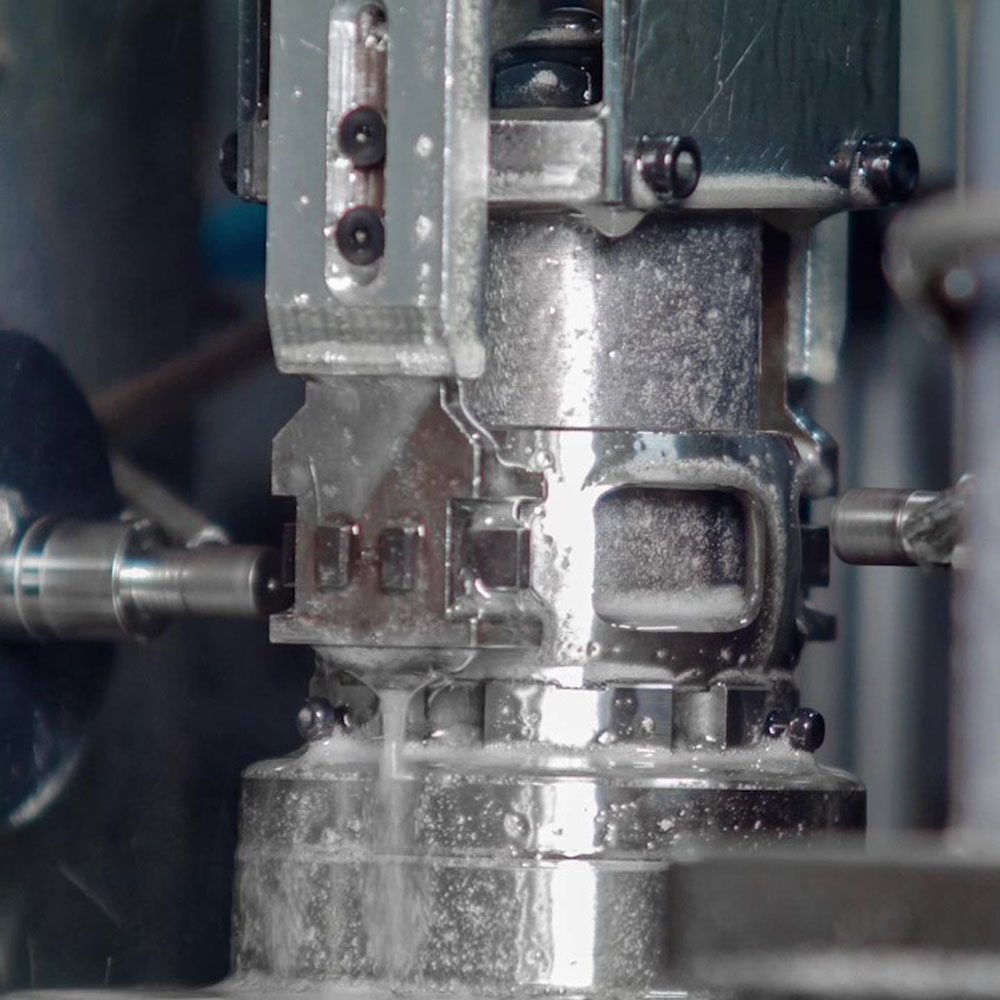
Through form grinding and multi-axis interpolation control, a CVJ cage grinder achieves precise machining of complex cage groove profiles, ensuring:
Consistent groove curvature
Stable surface roughness
Accurate ball contact angle
Uniform operating clearance
These parameters are essential for low noise, smooth rotation, and long service life of CV joints.
Key Technical Features of Modern CVJ Cage Grinder Machines
Modern CVJ grinding machine systems integrate multiple advanced technologies to meet automotive grade precision requirements.
High rigidity grinding structure
Heavy duty machine bed and high stiffness spindle systems ensure stable grinding performance and long-term accuracy retention.
Form grinding technology
Precision wheel dressing and controlled grinding paths enable accurate generation of complex cage groove geometry.
Multi-axis CNC control
Advanced CNC systems coordinate multiple axes to maintain profile accuracy across the entire cage raceway.
In-process measurement and compensation
Integrated gauging systems allow real-time error detection and automatic compensation, improving consistency in mass production.
Automation interface capability
Modern CVJ cage grinder machines are designed for seamless integration into automated CV joint production lines.

Impact of Cage Accuracy on CV Joint Performance
Insufficient cage grinding precision can severely affect CV joint performance and vehicle NVH characteristics. Typical problems caused by low accuracy cages include:
Abnormal noise and vibration
Accelerated ball wear
Reduced CVJ service life
Lower transmission efficiency
Degraded vehicle comfort
Therefore, selecting a high precision CVJ cage grinder at the early stage of CV joint production line planning is critical for ensuring product quality and brand reliability.
Automated CVJ Production Line Application Case
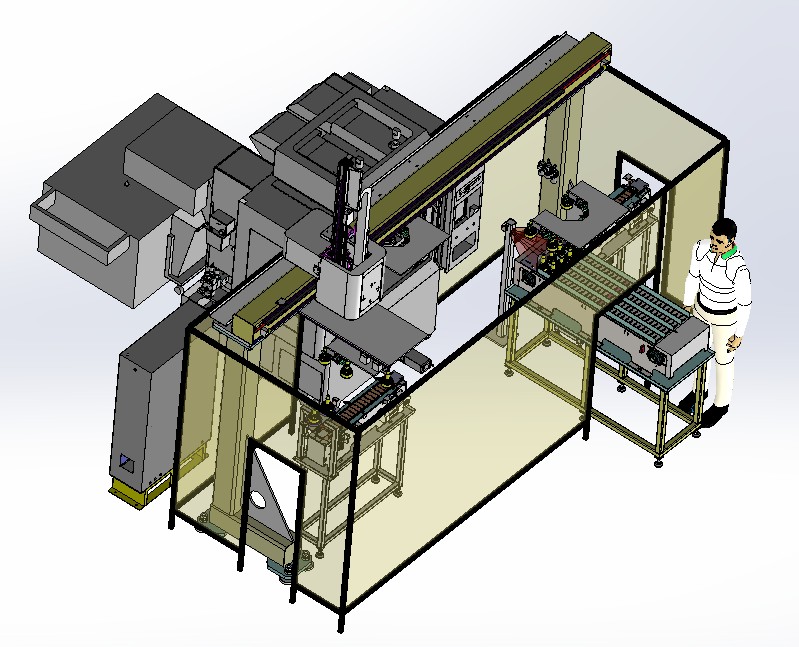
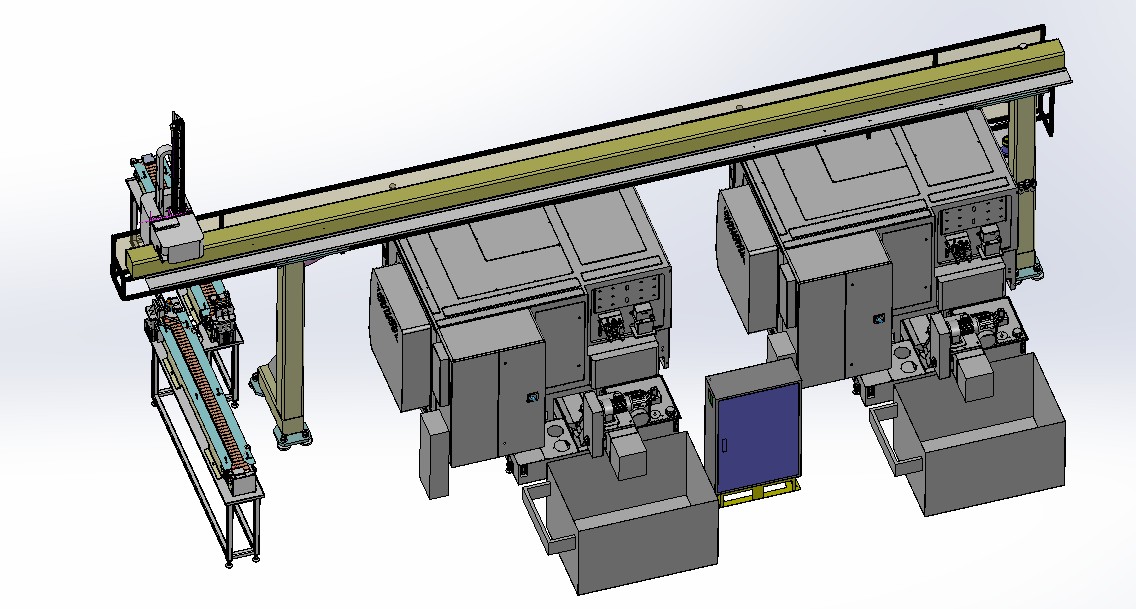
In a complete CV joint manufacturing project for a new energy vehicle component supplier, we implemented an automated cage machining line centered around a high-precision CVJ cage grinder. The line covers the entire process from raw cage loading to grinding, measurement, and sorting.
The automated system includes:
Robotic loading and unloading
In-line measurement and compensation
Multi-machine cycle synchronization
Data traceability and quality monitoring
After implementation, the customer achieved approximately 40% higher cage machining efficiency, significantly improved consistency, and reduced manual dependence. The CVJ cage grinder became the core precision unit within the automated line.

Value of Automation in CVJ Cage Grinding Manufacturing
As automotive component production shifts toward higher precision and larger volumes, integration of CVJ cage grinding automation line is becoming an industry standard.
Automation in CVJ cage grinding provides several key benefits:
Improved machining stability
Reduced human error
Higher equipment utilization
Full quality traceability
Lower long-term manufacturing cost
For CV joint manufacturers, automation is not only an efficiency tool but also a fundamental quality assurance strategy.
Organizational Transformation Required for Automation Adoption
The adoption of CVJ cage grinder automation reshapes manufacturing processes and organizational structures. Companies must evaluate each production step to identify the highest automation potential, particularly in cage grinding, groove inspection, and sorting operations.
Managers should develop an automation roadmap to optimize workflow and resource allocation, ensuring that core equipment such as the CVJ cage grinder operates at maximum efficiency within integrated production systems.
Automation Trends in Aging Emerging Economies
Emerging economies such as Argentina, Brazil, China, are experiencing aging workforces and shrinking labor pools. This demographic shift is constraining manufacturing growth and increasing labor costs.
Accelerating automation deployment, including CVJ cage grinder-based production lines, can help maintain productivity levels and support industrial competitiveness in these regions. For countries aiming at faster economic growth, automation adoption combined with process transformation will be essential.
Workforce Evolution in the Age of Grinding Automation
As CVJ cage grinder machines increasingly handle repetitive and predictable machining tasks, human roles are shifting toward equipment supervision, quality analysis, and process optimization. Manufacturing jobs are becoming more complex and skill-intensive.
Companies must invest in workforce training so operators can manage automated systems, analyze production data, and optimize grinding processes. This transition enables organizations to fully leverage CVJ cage grinder technology and automation investments.
Conclusion: CVJ Cage Grinder as a Core Technology for Future CVJ Manufacturing
Driven by the rapid expansion of the new energy vehicle industry, high-precision CVJ cage grinder technology is becoming indispensable in CV joint manufacturing. Combined with automated production lines, CVJ cage grinding is evolving toward higher accuracy, efficiency, and intelligent control.
For automotive component manufacturers, adopting CV joint cage grinding machine equipment and automation solutions is a strategic step to enhance product quality, productivity, and global competitiveness.