

Grinding Constant Velocity Joints with GOLP Machines: CVJ Grinding Machine Solutions and Automation Practice
With the rapid growth of new energy vehicles and modern automotive drivetrain manufacturing, the precision, durability, and consistency requirements for constant velocity joints (CV joints, CVJ) are continuously increasing. As the final precision finishing process in CVJ production, grinding directly determines groove geometry accuracy, motion smoothness, and component lifespan. Therefore, high performance CVJ grinding machine technology has become essential in advanced CV joint manufacturing.
GOLP Machinery specializes in CV joint machining equipment and provides complete CVJ grinding solutions ranging from standalone machines to automated cells and fully integrated production lines. These CVJ grinding machine solutions help manufacturers significantly improve CVJ machining quality and production efficiency.
Complete CVJ Grinding Solutions from Single Machine to Production Line
To meet the diverse machining requirements of different CVJ components, GOLP offers a comprehensive portfolio of CVJ grinding machine systems covering outer races, cages, and related precision features. Typical solutions include:
CVJ outer race groove grinding machines;
CVJ cage window grinding machines;
CVJ inner race and housing grinding machines;
Automated loading and in-process gauging units;
Fully automated CVJ grinder production lines;
Through modular configuration, each CVJ grinding machine can operate as a standalone automated unit or as part of a synchronized multi-machine line.
Main Machining Targets of a CVJ Grinding Machine
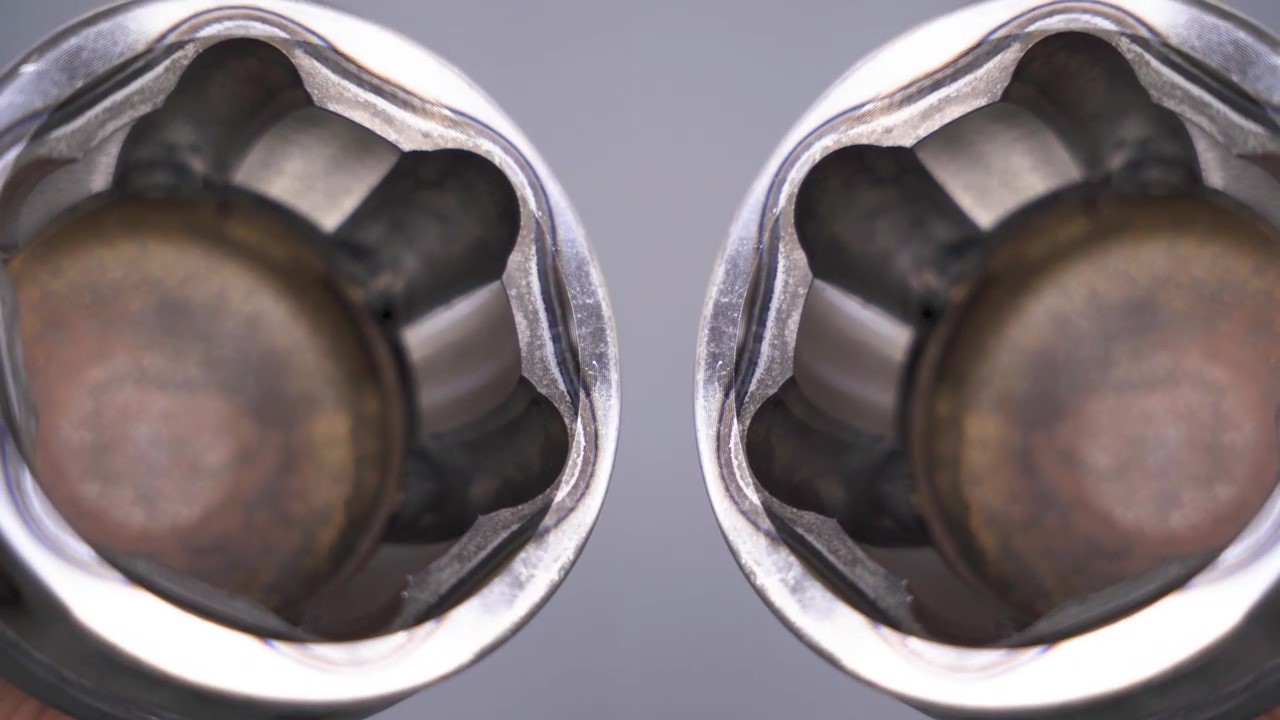
A CVJ grinding machine is designed to perform high-precision grinding of the critical rolling grooves and windows of CV joint components. Typical CVJ grinding operations include outer race groove grinding and cage window grinding.
Outer Race Groove Grinding
The outer race (bell housing) groove is the primary rolling track for balls inside the CV joint. Its curvature accuracy directly influences torque transmission stability, vibration level, and noise performance. A CVJ grinding machine uses form grinding wheels and multi-axis CNC path control to generate precise groove geometry, ensuring consistent ball contact angle and smooth motion.
Cage Window Grinding
The cage window holds and guides the balls during joint articulation. Window geometry and edge precision determine ball clearance and load distribution. A CVJ grinding machine equipped with dedicated fixtures and precision positioning enables stable grinding of cage windows and surrounding surfaces, improving assembly consistency and operational reliability.
Purpose and Importance of CVJ Grinding
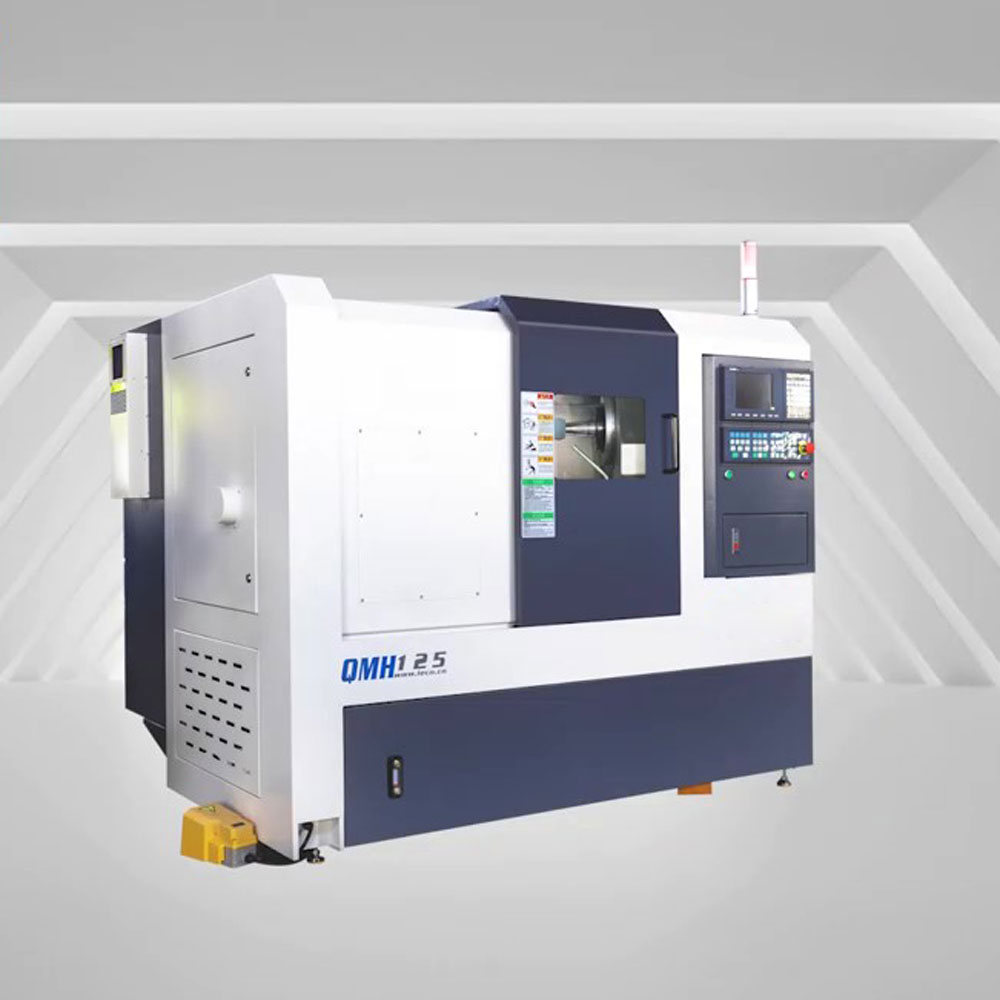
In CV joint manufacturing, grinding is the final precision machining stage. The primary objectives of CVJ grinding machine processing include:
Achieving high groove profile accuracy;
Reducing surface roughness;
Ensuring uniform ball contact conditions;
Improving rotational smoothness;
Extending component service life;
Compared with turning or milling, a CVJ grinding machine delivers superior dimensional accuracy and surface integrity, making it indispensable in high-end automotive CVJ production.
Working Principle of a CVJ Grinding Machine
A CVJ grinding machine typically operates using form grinding or oscillation grinding principles. The grinding wheel is dressed to match the groove profile of the CVJ component. Under CNC control, the wheel follows a programmed path relative to the workpiece, generating the required curved raceway surface with high precision.
A typical CVJ grinding machine cycle includes:
Workpiece loading and clamping;
Grinding wheel dressing and calibration;
Controlled grinding feed and path motion;
In-process measurement and compensation;
Final inspection and unloading;
Closed-loop control ensures that the CVJ grinding machine maintains stable accuracy during high-volume production.
Automation Solutions to Improve CVJ Grinding Efficiency
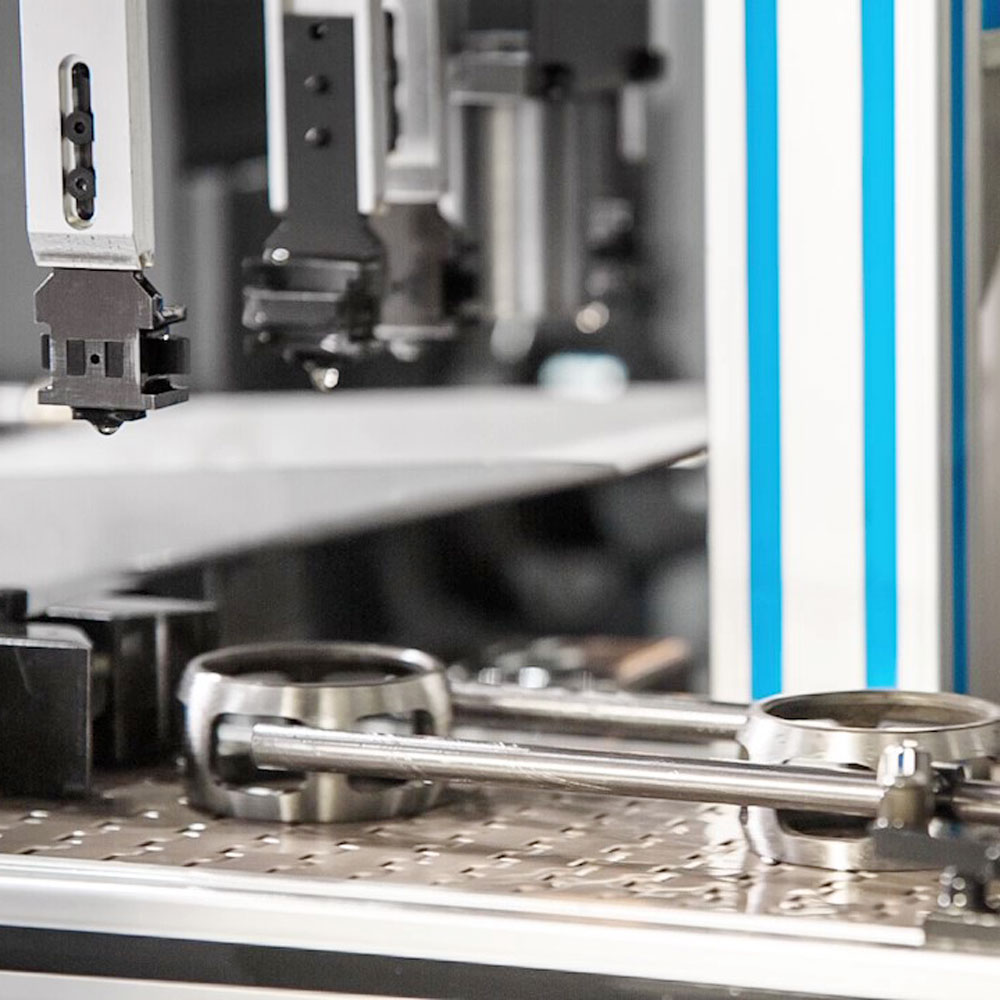
To meet the large-scale production demand of CV joint manufacturing, GOLP Machinery has developed multiple automation configurations centered on the CVJ grinding machine platform.
Standalone automated grinding cell
Robotic or gantry loading enables continuous grinding cycles with minimal manual intervention.
Multi-machine linked system
Several CVJ grinding machine units are connected by transfer systems to achieve synchronized cycle times and continuous flow production.
Fully automated CVJ grinding line
Grinding machines, gauging stations, washing, sorting, and data systems are integrated into a complete CVJ grinding production line.
Automation significantly increases utilization and consistency of CVJ grinding machine operations.

CVJ Grinding Automation Case Study
In a CV joint manufacturing project for an automotive drivetrain supplier, GOLP delivered a complete automated CVJ grinding line built around multiple CVJ grinding machine units and in-line gauging stations.
The line performs:
Automatic outer race groove grinding;
Automatic cage window grinding;
In-process dimensional inspection;
Automatic sorting and traceability;
After commissioning, the customer achieved approximately 35% higher grinding productivity, improved product consistency, and reduced labor costs, meeting the stringent precision requirements of new energy vehicle CV joints.
From Standalone Machine to Full Line: GOLP CVJ Grinding Capability
GOLP Machinery provides scalable CVJ grinding machine solutions according to customer production volume, takt time, and plant layout:
Standalone CVJ grinding machine;
Automated grinding cell;
Multi-machine linked system;
Complete CVJ grinding production line;
This flexible architecture enables simultaneous improvement of CVJ manufacturing quality and efficiency.

Integration with CVJ Cage Grinding Technology
In modern CV joint production, CVJ grinding machine solutions are often combined with specialized cage grinding equipment to form a complete precision finishing chain. While the CVJ grinding machine processes outer races and windows, dedicated cage grinders ensure accurate cage groove geometry. Together, they establish the geometric compatibility required for smooth CV joint articulation.
Conclusion: CVJ Grinding Machine as Core Equipment in Modern CVJ Manufacturing
As the automotive industry transitions toward electrification and high precision drivetrain systems, the CVJ grinding machine is becoming a central technology in CV joint manufacturing. Through automation and line integration, CVJ grinding is evolving toward higher accuracy, efficiency, and intelligent control.
GOLP Machinery provides complete CVJ grinding machine solutions from standalone machines to fully automated production lines, enabling manufacturers to achieve stable quality, higher productivity, and advanced manufacturing capability in CV joint production.