

Precision Grinding of CV Joint Cage Windows
In automotive power transmission systems, the constant velocity (CV) joint plays a vital role in ensuring smooth torque transfer to the wheels without angular loss. As a core component of the CV joint, the cage directly determines motion stability. On the cage, the seemingly simple ring of "windows" --professionally known as cage pockets--becomes the ultimate benchmark for evaluating cage quality. The grinding accuracy of these windows defines the performance ceiling of the entire cage.

Process Core of Cage Windows
The windows of the cage are far from ordinary holes. Each window is the functional core of the cage structure. Its rectangular geometry is precisely calculated, with dimensions slightly larger than the rolling balls, ensuring both stable containment and smooth rolling at high speeds without disengagement. The connecting bridges between windows act as load-bearing beams, directly affecting cage strength.
For this reason, grinding the two side surfaces of each cage window becomes an extremely demanding process in terms of precision, efficiency, and consistency. The goal is not only accurate forming, but also achieving strict micron-level standards:
Flatness of the grinding datum surface ≤ 0.005 mm
Parallelism between datum and non-datum surfaces ≤ 0.01 mm
Cylindricity of positioning holes ≤ 0.05 mm
The maximum grinding allowance on one side of the cage window, including deformation and error, is limited to 0.15 mm. Meanwhile, the cage material hardness typically reaches HRC 58-62, placing high demands on grinding tools. Every parameter represents a firm commitment to quiet operation, durability, and high efficiency of the CV joint cage.

Three Axis Linkage and Dual Side Synchronous Grinding
The technological breakthrough of modern cage window grinding lies in three coordinated advancements:
Intelligent Coordination of Positioning and Indexing
The machine adopts a dual coordinate CNC system combined with a high precision CNC indexing unit. By setting the number and angular distribution of cage windows once, the system automatically controls cage rotation and positioning, eliminating repetitive manual errors. Imported ball screw drives ensure fast response and high positioning accuracy for cage machining.
Process Coordination of Dual-Side Grinding
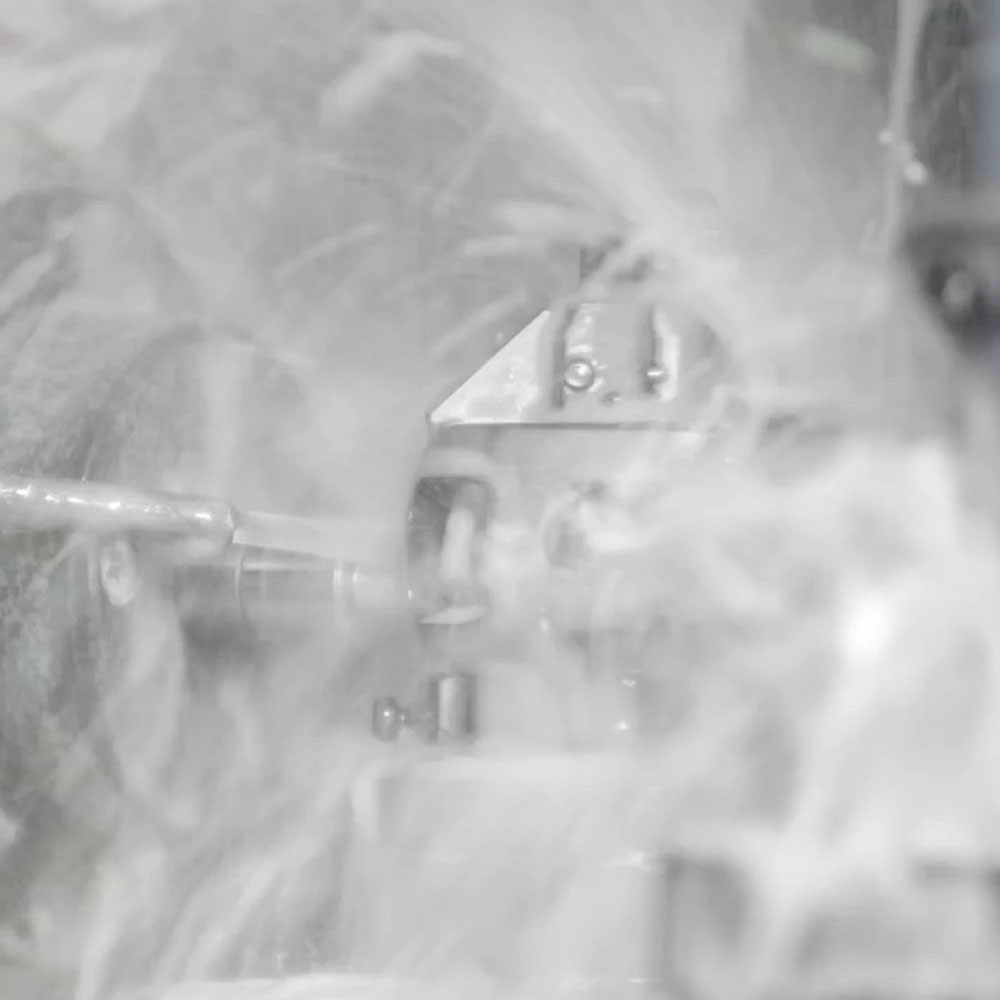
Traditional single side grinding is replaced by simultaneous dual side grinding. Using dual spindles or compound grinding wheels, both sides of a cage window are ground at the same time after a single precise positioning. Two high speed electric spindles feed synchronously, forming both profiles of the cage window in one pass. This doubles efficiency while guaranteeing symmetry, parallelism, and consistent center distance of each cage window.
Structural Rigidity and Precision Coordination
To handle hardened cage materials (HRC 58-62), machines are equipped with CBN grinding wheel electric spindles featuring inverter-controlled stepless speed regulation. CBN abrasives provide excellent hardness and thermal stability, enabling high efficiency precision grinding of the cage. High rigidity machine beds and guideways withstand the combined grinding forces, ensuring stable dynamic accuracy within a processing range of Φ40-Φ80 mm rotation diameter and up to 40 mm cage length.
From Qualified Cage to High Quality Cage
Performance Enhancement
Uniform spacing, high symmetry, and low surface roughness of cage windows ensure even load distribution on rolling balls. This leads to lower vibration, reduced noise, smoother torque transmission, and lower internal friction within the cage.
Reliability Breakthrough
Consistent wall thickness and precisely formed bridges significantly improve fatigue strength and load bearing capacity of the cage under high speed and large articulation angles. This reduces the risk of premature cage wear or fracture and greatly extends service life.
Intelligent Manufacturing
This technology fully supports automated and intelligent production lines. Stable cage processes, predictable cycle times, and digital control allow seamless integration into flexible manufacturing systems (FMS), enabling efficient mixed production of multiple cage models.
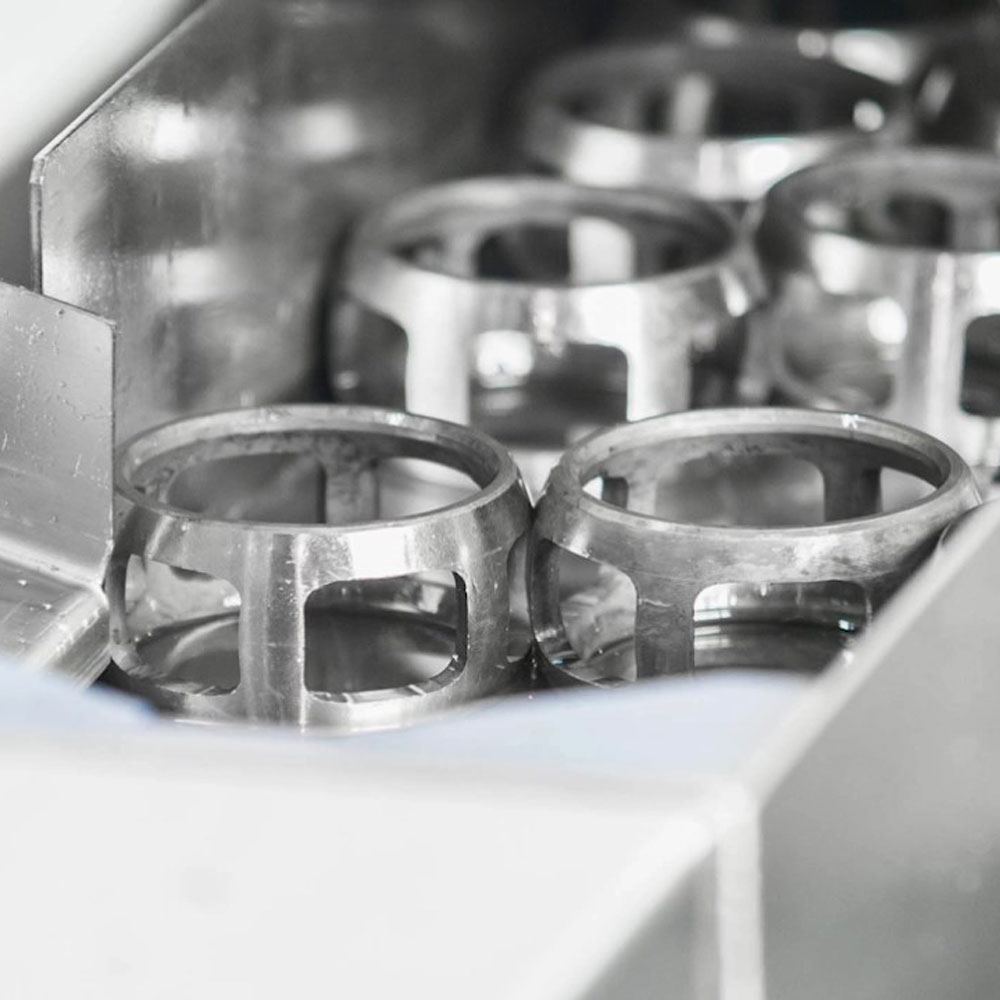
With extensive experience in CV joint cage manufacturing processes, we provide customized automated production lines tailored to customer requirements.